


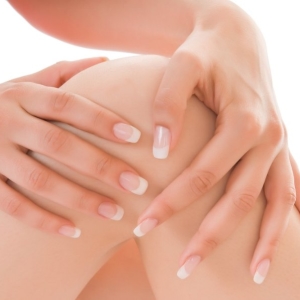
The pain in the knee is characteristic in case of damage to the meniscus, that is, the cartilage layer. The reason for this may be injuries of different nature that violate the meniscus and its functions.
Menisc function
Earlier, the meniscus was recognized as a “non -functioning residue” of muscles. But medicine began its study and discovered what role this residue plays. Meniski are necessary for the distribution of loads, reducing voltage at the site of contact, depreciation of sudden movements, stabilization, restrictions on the amplitude of movements. In other words, they send the brain signals about the condition of the knee joint.
- The maximum bending and extension of the extremities gives a load on menis about 85% and 55–70%.
- When removing the medial meniscus, the joints are in contact with their surface by 50-70% of the smaller area, while the tension doubles.
- If the lateral meniscus is removed, then the contact area decreases by 50%, and the voltage increases by 300%.
When the meniscus is removed, the joint gap decreases, growths and bone spikes are formed. In the event of a blow, the load on the cartilage enters without depreciation.

The frequency of meniscus ruptures
For ten thousand people, meniscus rupture occurs in 70 people. It is noteworthy that male tears occur more often than that women. Gaps arise in youth, after 40 years this is due to chronic changes in the meniscus. Also, people in old age face the problem. Most often, all kinds of damage is received by an internal meniscus.
In youth, the risk of acute and traumatic tears increases. It can be isolated and at the same time damaging ligaments and meniscus. Basically, a lateral meniscus is torn than mobile. With a fracture of the tumbling tiles, the meniscus is most often torn.

Symptoms of damage
The meniscus is two types - internal and external. The first is damaged much more often as a result of minimal mobility. If a person feels stiffness in movements that cuts pain in the knee, swelling of the joint, cracks that bring pain, then these are signs of meniscus damage. Sometimes the reason lies in the development of arthrosis of the knee joint.
The above phenomena can occur after damage, but more accurate symptoms occur after several weeks. In this case, the patient has:
- severe pain in the joint gap
- access of liquid
- "Blockade" of the knee
- weakened work of the hip muscles

Diagnostics
You can determine the signs of damage with special tests. These are the exercises of Landa or Baykov, representing the extension of the joints. There is also a technique based on scrolling the joints - this Bragard, Steiman. You can also identify meniscus injury with:
- MRI
- symptoms of compression
- mediolateral tests
The meniscus has nonspecific symptoms. They are the same as And with bruises, sprains. For this reason, the doctor should carefully examine the patient, and only then prescribe the appropriate treatment.
The meniscus for injuries can break away from the capsule, or break out (transversely, longitudinally), be crushed. Compression is observed at the external meniscus, and the rupture in the joint cavity.

Sluggish diagnostics
The doctor may not always make a diagnosis. Traumatologists appoint x -rays, but they do not see a meniscus. Often doctors recommend calm and applied cold. Relief occurs, but until the next case of excessive load or injury. If the knee is swollen and swells, then an operation is needed here.
You can recognize the gap using highly equipped technology is computer rengenogram. This will identify the problem in the early stages. Ultrasound recognizes the problem in 50-60% of cases of damage. Magnetic resonance Tomography gives almost a hundred percent result of the diagnosis. And unnoticed fractures at the X -ray can be seen using MRI.

Probable consequences
The rupture of the meniscus leads to the mechanical instability of the joint and involves treatment. In this case, it can cleaning Or block the joint. The problem affects the cartilage that is damaged. The surface of the joint changes as a result of the fact that movements are carried out without a protective laying.
Numerous factors affect the restoration of the lateral and medial meniscus. Fast recovery depends on how a gap has long occurred. If the ligamentous apparatus is weak, then it will be difficult to completely recover. At the age of 40, there are much more chances for recovery.

 2
2 1448
1448







When painful sensations appear in it, this is something with something of course. Getting rid of them is not so simple. The basis of the foundations of course non -steroidal anti -inflammatory, but I do not like that they harm the stomach. Therefore, to reduce their dosage, I drink rheumatlex. It is on a natural basis, is absolutely safe and also has an anti -inflammatory effect. Direct Mast HEV for everyone with a similar problem.